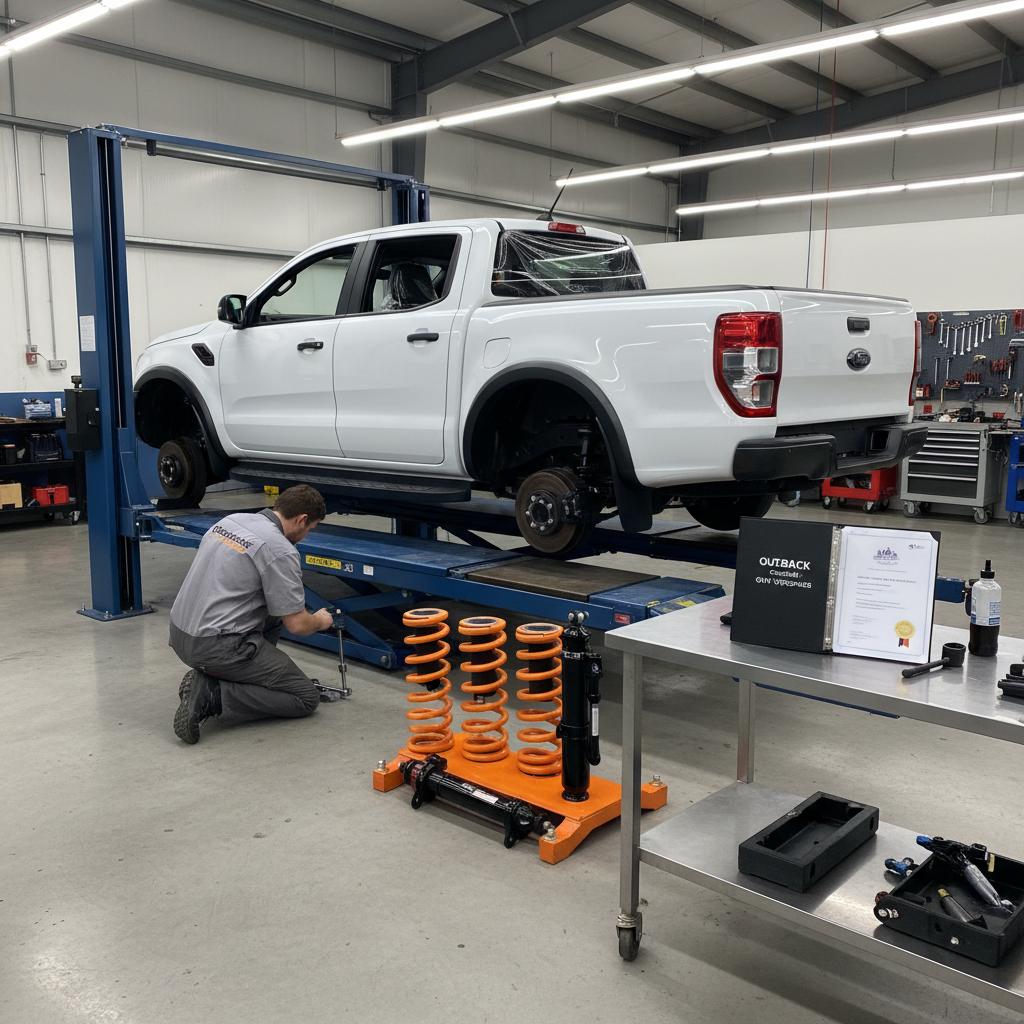
How to read weight figures and examples
- Ratings are maximum limits, not measurements of your loaded setup. Confirm the exact variant and approved ratings.
- Measure loaded coupling weight. A percentage or the difference between ATM and GTM ratings does not establish today's coupling weight.
- An added load changes both axle reactions according to its position. A change is not a total axle load; use measured starting axle weights and add each load once.
- Combination mass is unhitched loaded vehicle plus total loaded trailer, or the sum of all coupled axle readings. Count coupling mass once.
- Examples and AI suggestions are planning aids, not verified measurements or compliance clearance. Unknown figures require measurement; active weight-distribution hitches and gooseneck arrangements need their own assessment.
Introduction
If you're planning a GVM upgrade for your vehicle, one of the most important decisions is timing. In Australia, there is a meaningful difference between a GVM upgrade applied before a vehicle is first registered — a pre-registration upgrade — and one applied to a vehicle already in service. The two pathways can offer significantly different upgrade thresholds, simpler or more complex processes, and different outcomes for your vehicle's registration documentation.
Understanding this difference before purchasing a vehicle can change how you plan your setup — and potentially increase the maximum GVM upgrade achievable.
---
What Pre-Registration Means in This Context
"Pre-registration" refers to the period between when a vehicle is manufactured (or imported) and when it is first registered for road use in Australia. For most buyers, this is the window between taking delivery from a dealer and the point at which the vehicle is registered in their name.
In some situations, manufacturers and their approved modifier networks apply GVM upgrades during this pre-registration window. The vehicle is modified, inspected, and re-certified before it enters service — meaning the registered GVM reflects the upgraded figure from the first moment the vehicle is on the road.
This approach is sometimes referred to as **second-stage manufacturing** — where the vehicle passes through an engineering modification process before its registration pathway is completed.
---
What Post-Registration Means
Post-registration upgrades are applied to vehicles already registered and in service. This is the most common scenario for owners who purchase a vehicle, use it for some time, and then decide they need more carrying capacity.
Post-registration GVM upgrades are performed by aftermarket engineering companies who assess the vehicle, install approved components, and provide engineering certification for the modification. The vehicle's registration documentation is then updated to reflect the new GVM.
This pathway is well-established and widely available across Australia for many popular vehicle platforms.
---
Why the Timing Matters: Upgrade Thresholds
The key practical difference between pre-registration and post-registration upgrades is often the **maximum achievable GVM**.
In many cases, pre-registration upgrades can achieve higher GVM outcomes than post-registration processes for the same vehicle. This is because:
**Pre-registration: Second-stage manufacturing pathway.** When the upgrade is applied before first registration, the modifier may be operating within a second-stage manufacturing approval framework. This allows the vehicle to be recertified at a higher GVM because the modification is integrated into the vehicle's compliance pathway before it enters service.
**Post-registration: Individual engineering sign-off.** Post-registration upgrades typically involve a qualified engineer certifying the modification on a vehicle-by-vehicle basis. In some cases the achievable GVM is lower because the vehicle's existing state constrains the engineering judgment.
As a practical example: some popular dual cab platforms may achieve a 500–600kg pre-registration upgrade through an approved supplier, but only a 300–400kg post-registration upgrade. The vehicle is the same; the pathway and its constraints differ.
---
Second-Stage Manufacturing Explained
Second-stage manufacturing is a formal concept in Australian vehicle compliance. It refers to the process of applying significant modifications to a vehicle — including GVM upgrades, body conversions, and other major changes — before the vehicle's first registration, as part of a managed compliance pathway.
A second-stage manufacturer is an entity authorised to make these modifications and issue updated compliance documentation. When a vehicle passes through a second-stage manufacturer, the resulting vehicle has its compliance documentation updated to reflect the modifications — meaning the registered vehicle has always had the higher GVM.
For GVM upgrades, working with an approved second-stage manufacturer before first registration can produce the highest achievable GVM for a given platform and the cleanest compliance documentation.
---
The Pre-Delivery Window
For buyers purchasing a new vehicle specifically intending to get a GVM upgrade, the pre-registration window is important to identify and use.
Typical pre-delivery process:
1. Vehicle is ordered and arrives at the dealership
2. Before the registration paperwork is completed, the vehicle is transferred to an approved modifier
3. The upgrade is installed, assessed, and certified
4. The vehicle returns to the dealership or is delivered directly to the buyer with the higher GVM already reflected in the registration documentation
This process requires coordination between the buyer, the dealer, and the modifier. It needs to be arranged before delivery, not after — once the vehicle is registered, the pre-registration window has passed.
Some dealers are familiar with this process and can facilitate it. Others are not. If a pre-registration upgrade is part of your plan, raising it with the dealer early in the purchase process — before signing and before delivery is scheduled — is essential.
---
Registration and Compliance Documentation
**Pre-registration upgraded vehicles:** The compliance plate and registration papers reflect the upgraded GVM from the outset. There is no record of a "lower" previous GVM. The vehicle's registered history simply shows the higher rating.
**Post-registration upgraded vehicles:** The compliance documentation shows the original GVM, with the upgrade documented separately through the engineering certificate and a modification to the registration record. In most states, the registration is updated to reflect the new GVM.
For insurance, roadworthiness, and resale purposes, having clear engineering documentation is important in either case. The pre-registration pathway tends to produce simpler, cleaner documentation because the modification is built into the vehicle's original compliance history.
---
State and Territory Considerations
GVM upgrades — whether pre- or post-registration — are subject to Australian Design Rules and state/territory road authorities. The specific requirements for documentation, inspection, and registration update vary by jurisdiction.
General principles that apply nationally:
State-specific considerations:
If you are registering across state lines — for example, purchasing in one state and registering in another — it's worth confirming that the upgrade pathway used satisfies the requirements in your registration state.
---
Implications for Towing and Touring
Pre-registration upgrade benefits for touring and towing:
If you're purchasing a vehicle specifically to build out for touring or towing and know you'll need more payload than the standard GVM allows, the pre-registration upgrade approach can:
Post-registration upgrade realities:
For owners who have already purchased and are working within the post-registration pathway, upgrades are still typically achievable and meaningful. The lower potential upgrade ceiling is a constraint, but for many setups a 300–400kg upgrade is sufficient to address the payload issue.
---
Ownership and Resale Considerations
**Warranty implications:** Modifications can affect manufacturer warranties. Pre-registration upgrades performed through manufacturer-approved or dealer-coordinated processes sometimes carry fewer warranty complications than post-registration aftermarket modifications.
**Resale implications:** A GVM-upgraded vehicle is not necessarily harder to sell, but the modification needs to be disclosed. The engineering documentation is important for the next owner. Well-documented upgrades on popular platforms are generally understood by experienced buyers in the Australian market.
**Insurance declaration:** As with all modifications, a GVM upgrade needs to be declared to your insurer. The engineering certificate is the relevant supporting documentation.
---
How to Access a Pre-Registration Upgrade
1. **Decide before you purchase.** The pre-registration window exists only before first registration.
2. **Identify approved modifiers for your platform.** Research which engineering companies offer approved GVM upgrades for the specific vehicle model and year you're purchasing.
3. **Discuss with the dealer early.** Raise the pre-registration upgrade before signing. The dealer needs to know delivery will involve the vehicle going to a modifier before registration is completed.
4. **Coordinate the logistics.** Establish who arranges the transfer to the modifier, the timeframe, and how registration documentation is handled.
5. **Confirm the outcome before taking delivery.** Verify that the compliance plate and registration documentation reflect the upgraded GVM before accepting delivery.
---
Post-Registration Upgrade Process
For owners already past the registration point:
1. Contact an engineering company that offers GVM upgrades for your vehicle platform
2. Get a quote that includes the kit, installation, engineering assessment, and certification
3. Vehicle is inspected and the upgrade components are installed
4. Engineer assesses the vehicle and issues an engineering certificate
5. Documentation is submitted to the state road authority to update the registration
6. Insurer is notified of the modification
---
Practical Planning Tips
**Research your platform before purchasing.** Understand what pre-registration upgrade kits exist for the vehicle you're considering, and what the maximum achievable GVM is through both pathways.
**Quantify your payload requirement first.** Calculate your full setup — accessories, passengers, tow ball mass, fuel, cargo — and determine how much GVM you actually need.
**Don't assume all platforms can be upgraded equally.** Some vehicles have well-developed upgrade ecosystems with high ceiling upgrades. Others have limited kits or no approved options.
**Factor the upgrade cost into the purchase decision.** A pre-registration GVM upgrade adds cost and logistical complexity to the vehicle purchase.
---
Conclusion and Next Steps
The timing of a GVM upgrade is not just a procedural detail — it can meaningfully affect the maximum upgrade achievable and the simplicity of the compliance pathway. For buyers planning significant touring or towing setups, the pre-registration window is worth understanding and, where appropriate, using.
For owners already past first registration, post-registration upgrades remain a viable and well-established pathway.
Start a Risk Scan to get a structured assessment of your current GVM position and payload situation — as a starting point for understanding whether a GVM upgrade is the right next step.
---