How to read weight figures and examples
- Ratings are maximum limits, not measurements of your loaded setup. Confirm the exact variant and approved ratings.
- Measure loaded coupling weight. A percentage or the difference between ATM and GTM ratings does not establish today's coupling weight.
- An added load changes both axle reactions according to its position. A change is not a total axle load; use measured starting axle weights and add each load once.
- Combination mass is unhitched loaded vehicle plus total loaded trailer, or the sum of all coupled axle readings. Count coupling mass once.
- Examples and AI suggestions are planning aids, not verified measurements or compliance clearance. Unknown figures require measurement; active weight-distribution hitches and gooseneck arrangements need their own assessment.
Critical Oversights in Touring Build Planning
Many enthusiastic 4WD tourers focus on capability and adventure without fully considering the weight implications of their build. This oversight can lead to compliance issues, safety risks, and compromised touring experiences.
What Owners Often Miss
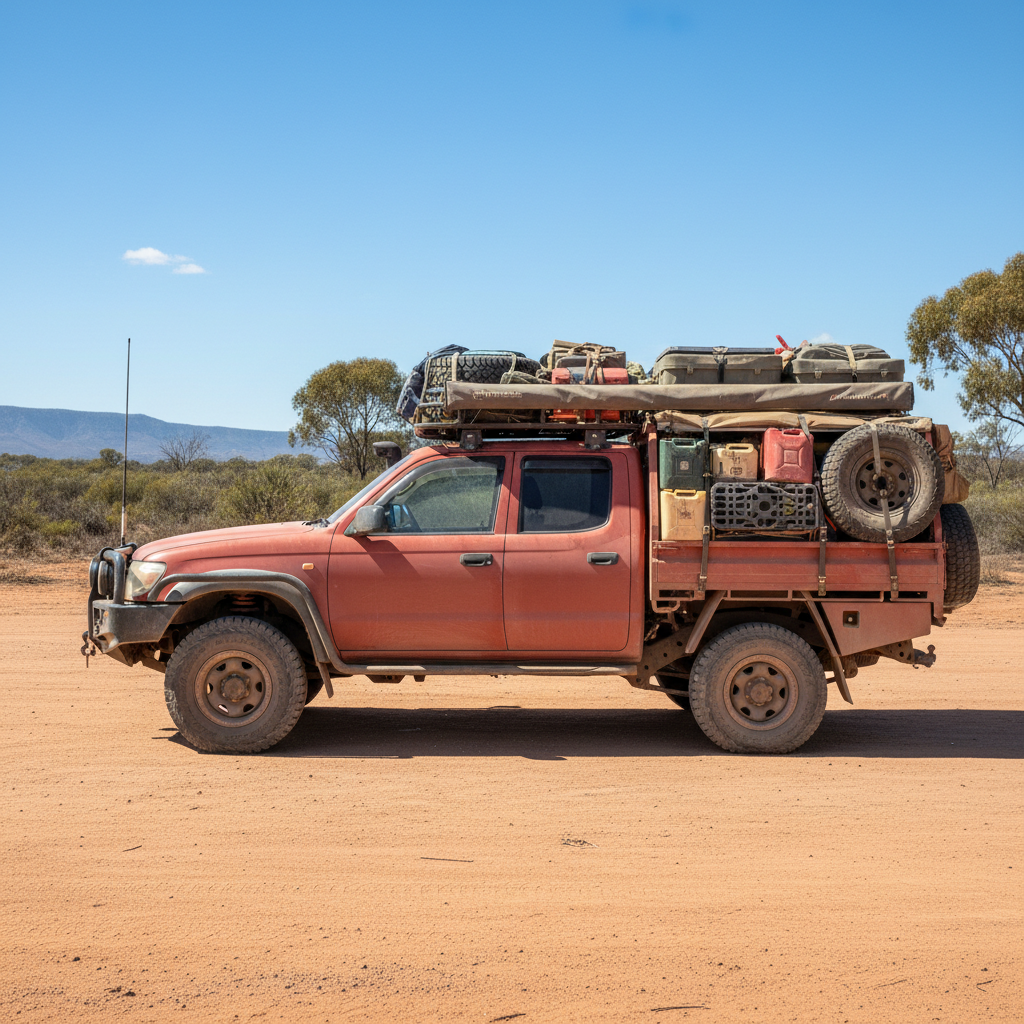
1. Cumulative Accessory Weight: Individual accessories seem manageable, but together they consume payload rapidly — and actual fitted weights are often higher than published brochure figures. Using conservative (upper-range) estimates: bullbar + winch (90–120kg), canopy + drawers (145–255kg), roof tent + rack (60–110kg), long-range tank empty (20–40kg) — a realistic total of 315–525kg before passengers, food, water, or gear. Actual weights depend on brand, material and fitment — always verify from manufacturer specifications or installer records.
2. Water and Fuel Weight: Water is 1kg per litre (200L = 200kg). Diesel is approximately 0.85kg per litre (150L extra = 127kg). Many tourers carry 300-400kg of fluids alone.
3. Passenger Weight: A family of four is 300-350kg — often forgotten in payload calculations.
4. Tow Ball Mass Impact: Obtain the actual loaded coupling measurement. An ATM rating does not establish download; include the measured load once in the vehicle mass budget.
The Reality Check
A typical dual cab ute scenario with 900kg payload capacity:
Fixed Weight (using conservative estimates — actual may be higher): Accessories ~420kg, driver + passenger 150kg. Remaining: approximately 330kg.
Variable Weight: Fuel (extra 100L) 85kg, water (100L) 100kg, food and gear 80kg, tow ball mass (2,500kg caravan) 300kg. Total variable: 565kg.
Result: approximately 235kg OVER payload limit before considering children, additional passengers, or full water tanks. If actual accessory weights are at the upper end of typical ranges, the overload position worsens further.
*Note: accessory weight figures above are indicative conservative estimates. Verify actual weights from manufacturer specifications or a weighbridge before finalising any setup.*
Weight Reduction Strategies
**Start a Risk Scan** to assess your touring build before your next adventure.
---