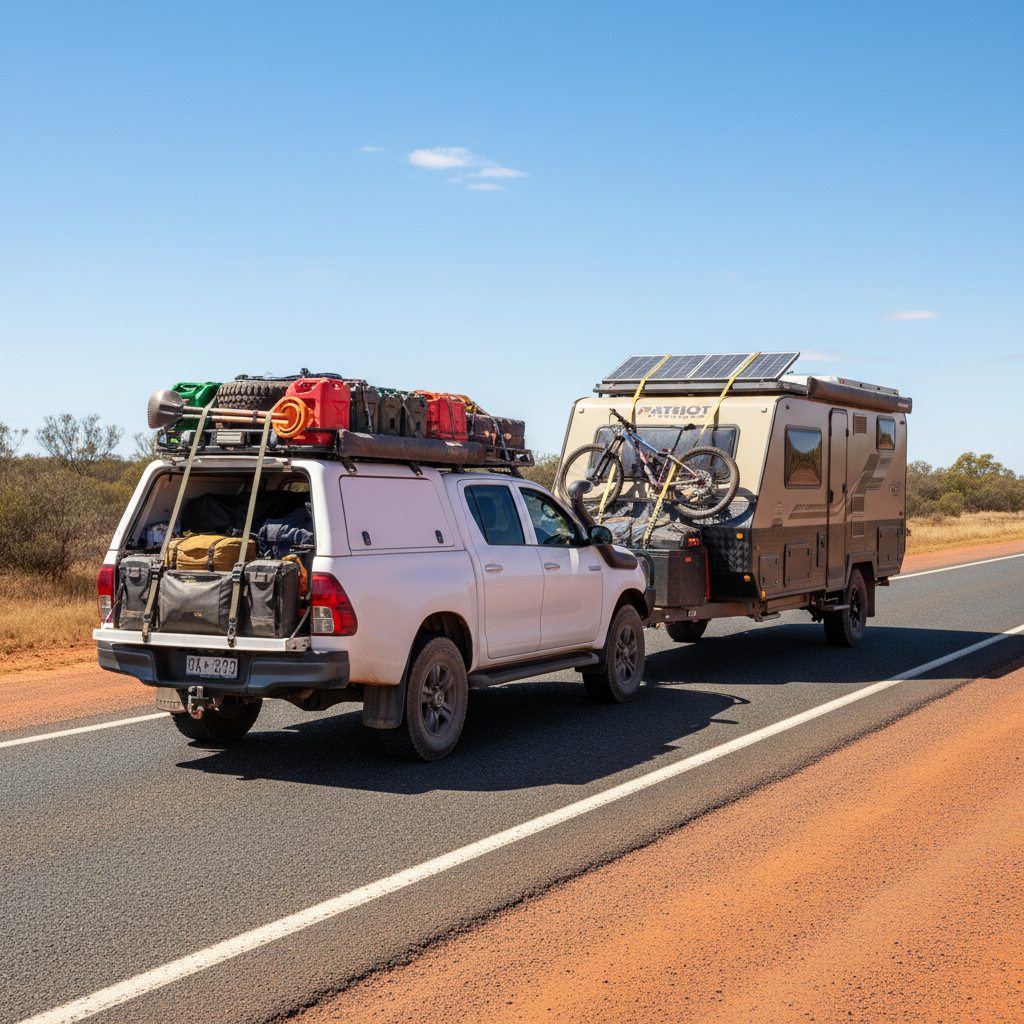
How to read weight figures and examples
- Ratings are maximum limits, not measurements of your loaded setup. Confirm the exact variant and approved ratings.
- Measure loaded coupling weight. A percentage or the difference between ATM and GTM ratings does not establish today's coupling weight.
- An added load changes both axle reactions according to its position. A change is not a total axle load; use measured starting axle weights and add each load once.
- Combination mass is unhitched loaded vehicle plus total loaded trailer, or the sum of all coupled axle readings. Count coupling mass once.
- Examples and AI suggestions are planning aids, not verified measurements or compliance clearance. Unknown figures require measurement; active weight-distribution hitches and gooseneck arrangements need their own assessment.
Start with the complete combination
Safe towing cannot be decided from one headline number. A tow vehicle, its passengers and accessories, the caravan, its cargo and the load applied through the coupling operate as one combination.
A useful assessment therefore checks every applicable limit at the same time. Passing the advertised towing-capacity test does not prove that the vehicle is within GVM, that the rear axle is within its rating, or that the loaded combination is within GCM.
This guide explains the core terms, the evidence to collect and a repeatable checking sequence. It is general educational information, not an engineering certificate or a legal determination for a particular vehicle.
The seven numbers to establish
Caravan tare mass
Tare is the caravan's mass under the measurement conditions stated by its manufacturer. It is a reference point, not necessarily the mass of the caravan as delivered with every option, dealer accessory or later modification.
ATM
Aggregate Trailer Mass is the maximum permitted mass of the loaded trailer when it is not coupled to a tow vehicle. The load supported at the coupling is included.
GTM
Gross Trailer Mass is the maximum permitted mass carried by the trailer's wheels when coupled. Because part of the trailer load is supported by the tow vehicle, ATM and GTM are related but are not interchangeable.
Read the companion guide: ATM, GTM and tare weight explained.
Towball mass
Towball mass is the downward load the coupled trailer applies to the tow vehicle. It consumes vehicle payload and can create a larger change at the rear axle because the coupling sits behind the axle.
There is no universal percentage that proves a setup is correct. Use the caravan manufacturer's requirements, the actual loaded measurement and the applicable vehicle and coupling limits. See towball weight explained.
Vehicle GVM and payload
Gross Vehicle Mass is the maximum permitted mass of the loaded vehicle. Available payload begins as GVM minus the relevant unladen mass, but real remaining payload must account for the actual vehicle, its fitted options, accessories, occupants, cargo and towball load.
Use why payload matters to build a realistic load list.
Axle ratings
Front and rear axle limits apply independently. A vehicle can be under GVM while an axle is overloaded. Rear-mounted accessories, cargo and coupling load make the rear axle a frequent constraint.
GCM
Gross Combination Mass is the applicable maximum combined mass of the loaded vehicle and loaded trailer. Do not assume that adding the maximum vehicle and trailer ratings produces an allowable operating combination. Use the figures and conditions published for the exact vehicle variant.
Evidence hierarchy: which figures should you trust?
Use the most specific reliable source available:
A dealer listing, generic model page or remembered figure is useful only as a lead to verify. If two sources conflict, do not select the more convenient number. Record the conflict and resolve it with the manufacturer, approved engineer or relevant authority.
ClearPath's database follows the same principle: unsupported values remain unknown rather than being filled with assumptions.
A repeatable pre-trip checking sequence
1. Identify the exact vehicle and caravan
Record year, variant, body style, engine and transmission where they affect ratings. For the caravan, record the precise model, layout and compliance-plate values. Similar names do not guarantee identical limits.
2. Record every applicable rating
Create one worksheet containing vehicle GVM, GCM, axle ratings, braked towing capacity and maximum coupling load, plus caravan ATM, GTM and any axle or coupling limits.
3. Build the real vehicle load
Include occupants, personal items, recovery equipment, fuel beyond the stated unladen condition, water carried in the vehicle, tools and every fitted accessory. Use measured or manufacturer-published fitted weights where possible.
For modification planning, read how accessories reduce payload.
4. Build the real caravan load
Start with an actual empty or travel-ready measurement when available. Add water, gas, food, batteries, solar equipment, annexes, bikes, tools and personal cargo. Their location matters as well as their mass.
5. Measure the travelling configuration
A useful weighbridge visit replicates the way the combination travels: normal passengers, usual cargo, fuel and water policy, caravan loaded, and weight-distribution equipment configured as instructed. Keep the ticket and note the loading condition.
Use how to read a weighbridge ticket before the visit.
6. Test each limit separately
Check:
The usable margin is controlled by the first limit reached, not by the most generous headline rating.
Common failure patterns
Shopping by towing capacity alone
A vehicle may advertise a high towing capacity while offering limited payload after passengers, accessories and coupling load. Begin with the complete load plan.
Treating brochure tare as travel-ready weight
Options, batteries, extra water capacity and dealer accessories can make an individual caravan materially different from a generic brochure figure. Verify the actual unit.
Ignoring axle distribution
GVM is not a substitute for axle checks. A rear axle can exceed its rating while total vehicle mass remains below GVM.
Assuming suspension changes increase ratings
Springs, dampers or airbags may change ride height or handling, but they do not by themselves change certified mass ratings. Any claimed rating change needs the required approved documentation.
Using calculated values as measured values
Calculations help plan, but they inherit every assumption in the inputs. Label estimates clearly and confirm the final travelling setup by measurement.
When the setup changes
Recheck after adding a bullbar, winch, canopy, drawers, batteries, a long-range tank, roof load or a different caravan. Recheck when passenger or water patterns change substantially. Keep a dated setup record so later measurements remain meaningful.
Your practical next steps
1. Gather the plates, manuals and approved modification documents.
2. List all occupants, accessories and regular cargo.
3. Use the ClearPath vehicle calculator for an initial estimate.
4. Search the verified caravan database for manufacturer-sourced specifications.
5. Run a Tow Match Check for the proposed combination.
6. Confirm the loaded setup at a licensed weighbridge and retain the evidence.
About this guide
This cornerstone guide is maintained by the ClearPath Editorial Team using an evidence-first method: exact variants, primary sources, explicit assumptions and clear separation between published ratings, calculated estimates and measured results. See how ClearPath researches and reviews information.
The requirements that apply to a particular setup can depend on jurisdiction, vehicle approvals and modifications. Confirm current requirements with the relevant road authority, manufacturer, approved engineer or other qualified professional.